
Pinus pinaster
Fast-growing pine native to Mediterranean, invasive in South Africa.

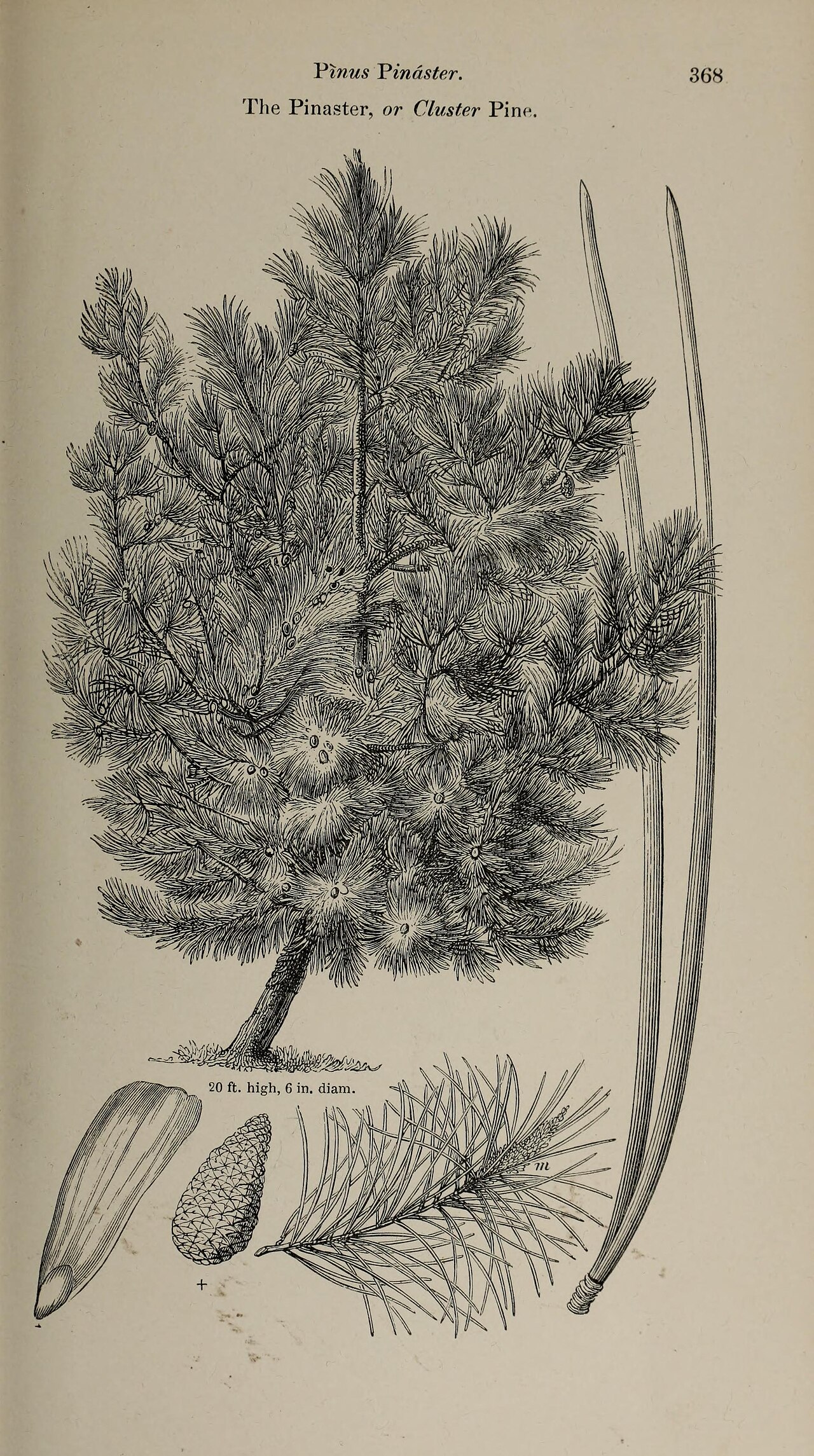
Internet Archive Book Images · No restrictions
Pinus pinaster, commonly known as the maritime pine, is a medium-sized pine tree native to the south Atlantic Europe region and parts of the western Mediterranean. It is a fast-growing hard pine with long needles and large cones, notable for its ecological and economic importance, particularly as an invasive species in South Africa.
- trunk_diameter
- up to 1.2 m (4 ft), exceptionally 1.9 m (6 ft)
- needle_length
- 10–25 cm (4–10 in)
- cone_length
- 8–22 cm (3–8.5 in)
- seed_length
- 8–10 mm (0.31–0.39 in)
- native_range
- western Mediterranean Basin and southern Atlantic coast of Europe
- invasive_region
- South Africa (since late 17th century)
Lore & Background
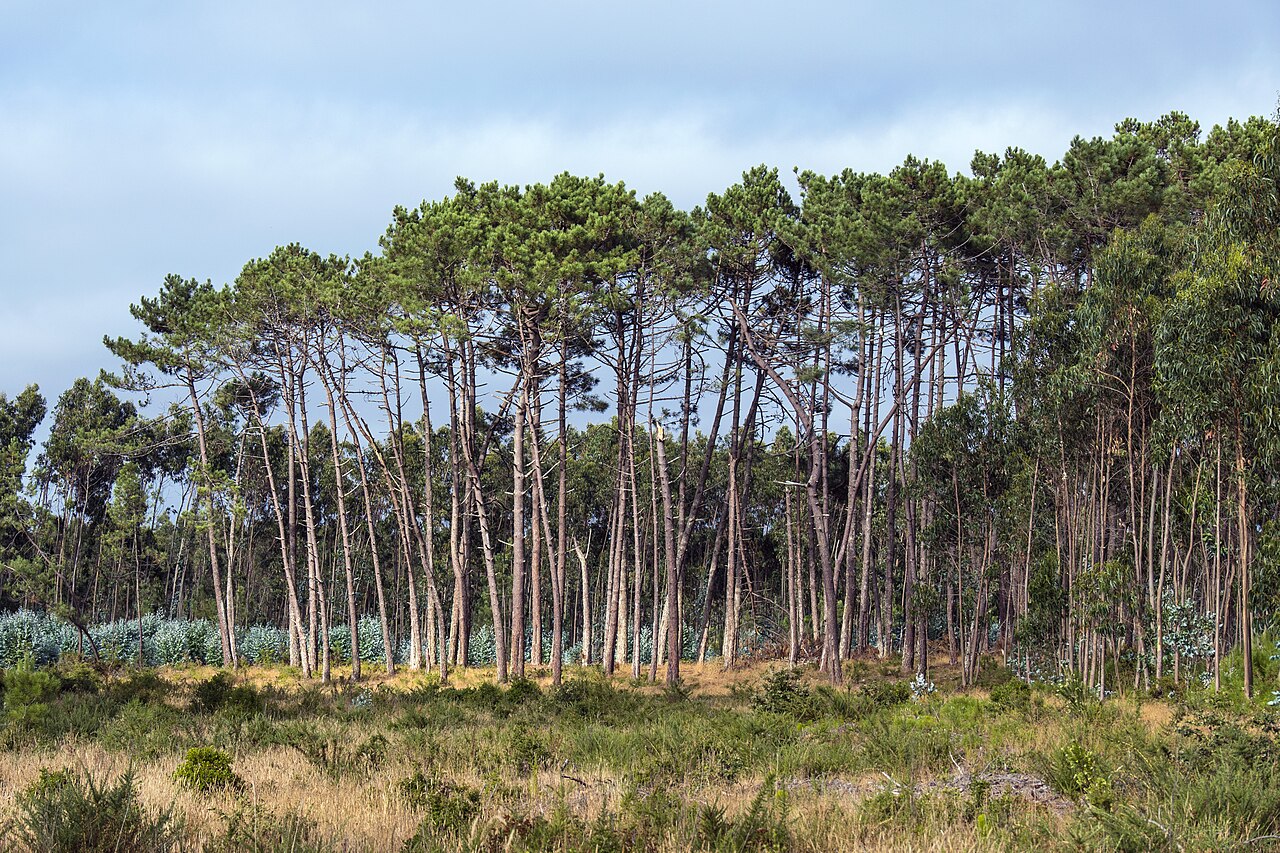
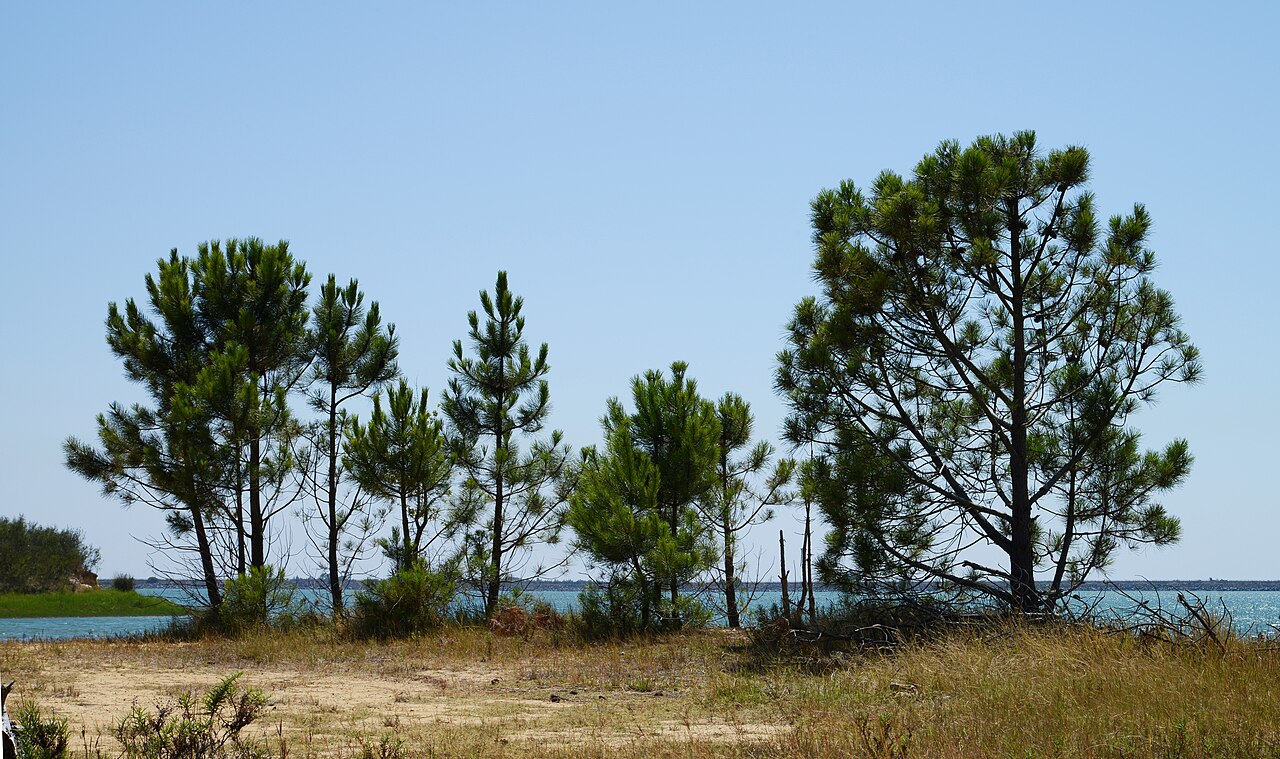
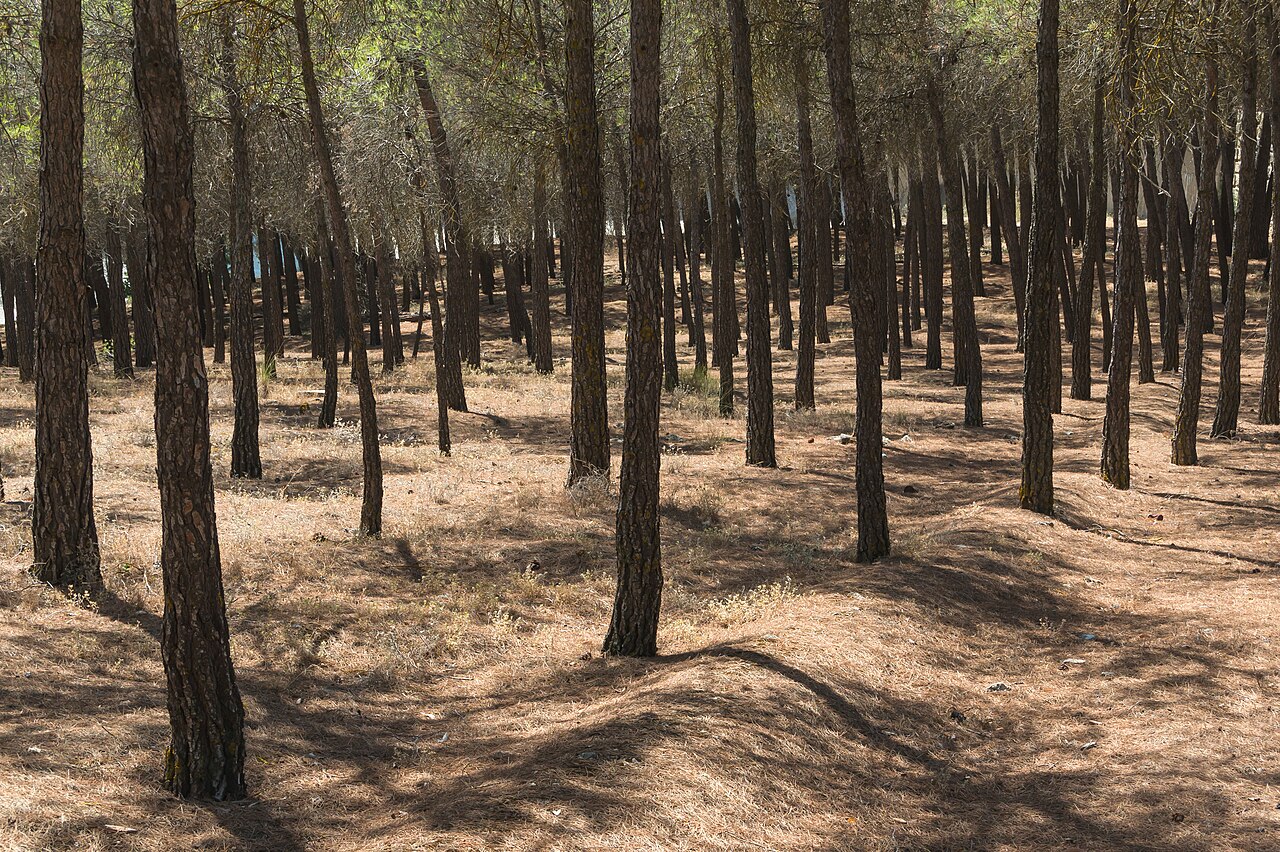
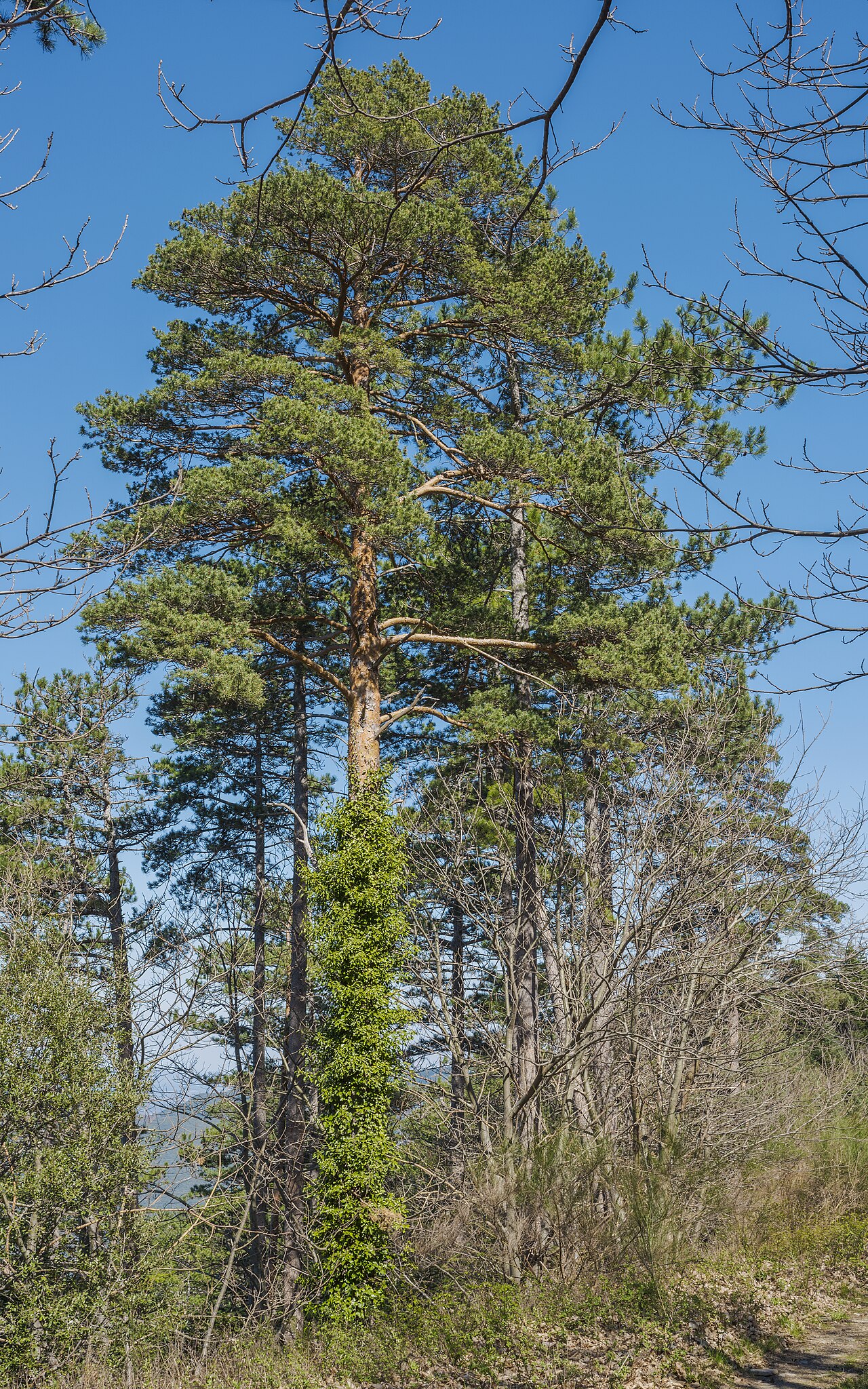
Pinus pinaster is a medium-sized tree reaching 20–35 metres tall, with orange-red, thick, deeply fissured bark. Its needles are in pairs, 10–25 cm long, stout, and bluish-green to yellowish-green, making it the European pine with the longest and most robust needles. The cones are conic, 8–22 cm long, ripening glossy red-brown after 24 months, and open slowly or after forest fire to release seeds that are wind-dispersed. The species is closely related to Turkish pine, Canary Island pine, and Aleppo pine. Three subspecies are accepted by the Plants of the World Online database, though not all authors consider them distinct: subsp. pinaster (Atlantic Europe), subsp. escarena (Mediterranean Europe), and subsp. renoui (Northwest Africa). Its natural range extends from Portugal and Spain to France, Italy, Croatia, and south to Tunisia, Algeria, and Morocco, favoring a Mediterranean climate. Pinus pinaster is a successful invasive species in South Africa, where it was imported at the end of the 17th century and planted commercially by the early 19th century. It invades fynbos vegetation, a fire-prone shrubland, and its cones release seeds after high-intensity fires, outcompeting native species. Its invasion has led to decreased biodiversity and reduced streamflow in catchment areas.
Reader's Guide
Pinus pinaster holds significance both as a native component of Mediterranean ecosystems and as a problematic invasive species in South Africa. In its native range, it is a fast-growing timber resource adapted to acidic and poor soils, and it plays a role in fire-prone shrubland ecology. However, its introduction to South Africa in the late 17th century led to widespread invasion of fynbos vegetation, causing a 50–86% decrease in native plant diversity in the Cape Peninsula and reducing streamflow by up to 82% in some areas. The species' ability to release seeds after fire gives it a competitive advantage over native flora, and its evergreen nature depletes water resources more than grasses and shrubs. Management efforts, such as thinning plantations, have shown positive effects, including increased streamflow and improved grazing conditions. The maritime pine also faces pests like the moth Dioryctria sylvestrella and the fungus Pestalotiopsis pini, which can weaken trees. Its legacy underscores the dual role of species as both a resource and a threat, highlighting the importance of careful introduction and management.
Did You Know?
- Pinus pinaster features the longest and most robust needles of all European pine species.
- Its cones open slowly over several years or after being heated by a forest fire to release seeds.
- In South Africa, invasion by Pinus pinaster has led to a 55% decrease in streamflow in fynbos catchments 23 years after planting.
- The species is naturalized and locally invasive in southern England, north of its native range.
Gallery
Frequently Asked Questions
Who is Pinus pinaster?
Pinus pinaster, the maritime pine, is a medium-sized conifer native to the southern Atlantic coast of Europe and the western Mediterranean Basin. It is a hard pine species that typically stands 20–35 m tall, with very long needles (10–25 cm) and conspicuously large cones (8–22 cm).
What are Pinus pinaster's powers/role?
As a fast-growing hard pine, it stabilizes coastal dunes, shelters native wildlife, and anchors sandy soils across its Mediterranean and Atlantic range. Economically it is prized for its timber, resin, and the seeds its large cones produce, which feed local fauna.
How does Pinus pinaster's story end?
In South Africa, where it was planted for timber and ornament, it has escaped cultivation and now outcompetes indigenous vegetation, making it one of the continent's most problematic invasive trees. Back in its native European coastal forests, it remains a long-lived, dominant canopy species with no sign of decline.
Why is Pinus pinaster important?
It is a key pioneer species that colonizes nutrient-poor sandy soils and creates conditions for other plants to establish along European coastlines. Its dual ecological and economic value—dune stabilization, habitat provision, timber, and resin—makes it one of the most widely managed pines in the region.
What makes Pinus pinaster stand out among other pines?
Its cones can reach 22 cm, far larger than most Mediterranean pine species, and its needles stretch up to 25 cm, giving it a distinctive silhouette. Combined with rapid growth and tolerance of harsh, sandy substrates, these traits explain both its native success and its invasive spread in places like South Africa.
More in Conifers & Allies 1-20
Spotted an error? Know more?
This is a living reference — every entry is fact-audited, and reader corrections feed straight into our audit queue. Suggest an edit · See this site's audit record