
Pinaceae
The largest conifer family, dominant in Northern Hemisphere forests.

Kevmin · CC BY-SA 3.0
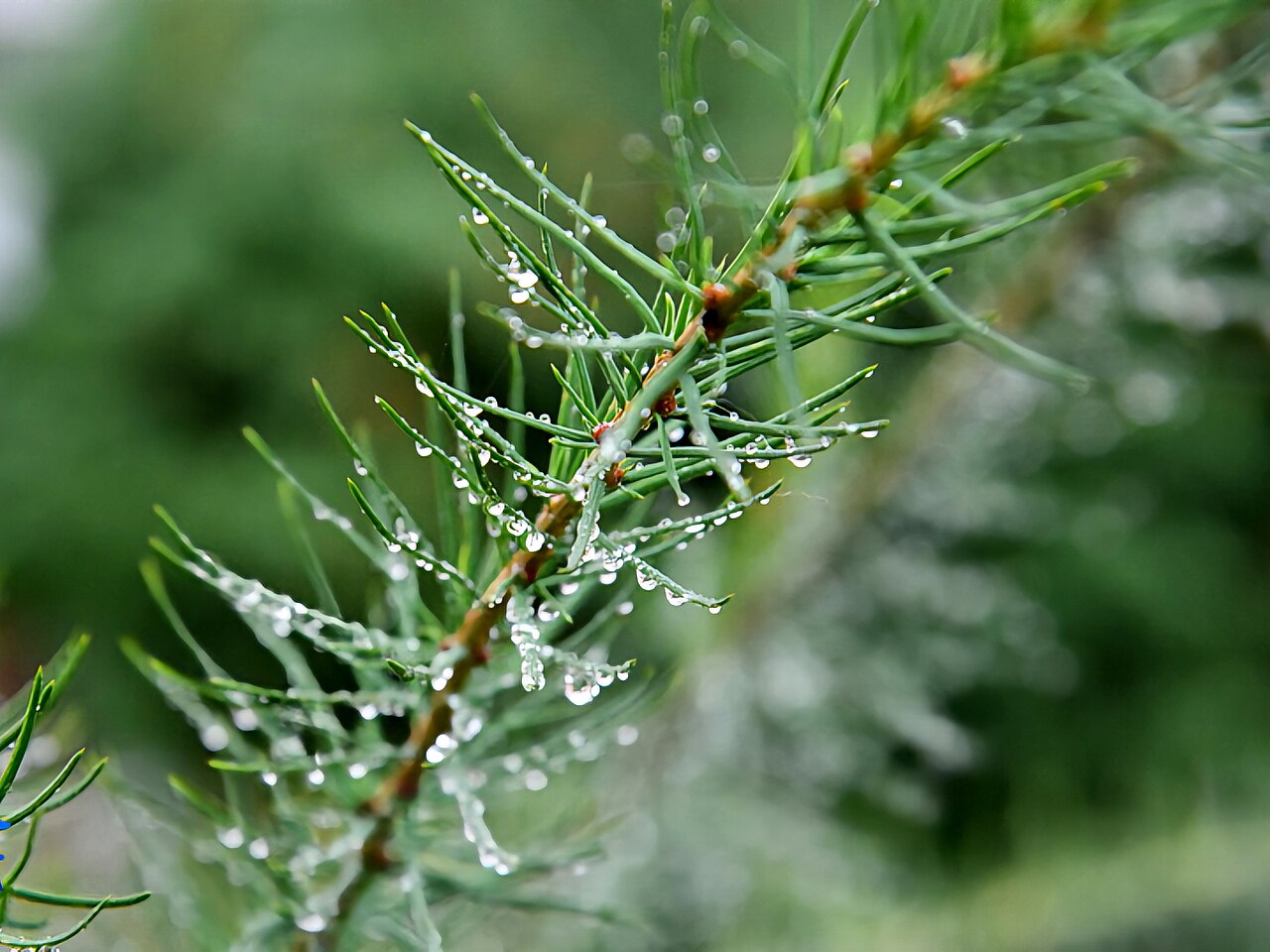
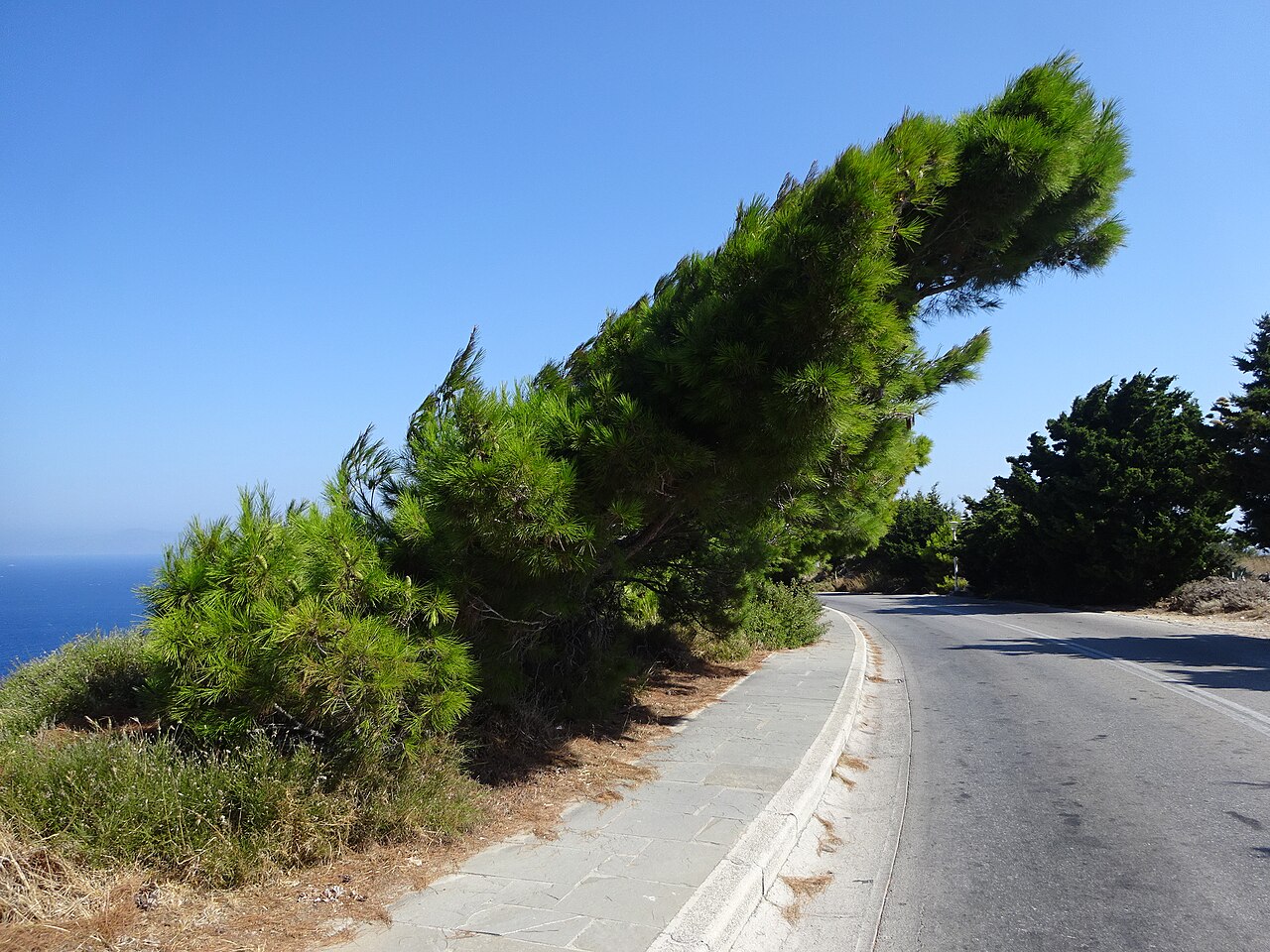
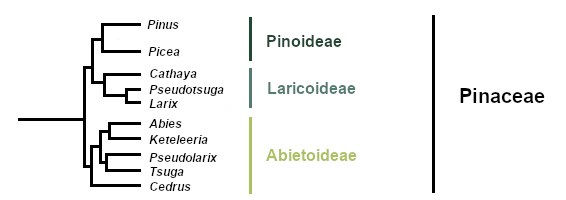
The Pinaceae, or pine family, is a large family of conifers that includes many commercially important trees such as cedars, firs, hemlocks, larches, pines, and spruces. The family often forms the dominant component of boreal, coastal, and montane forests.
- oldest_crown_fossil
- Early Cretaceous (oldest definitive crown-group fossil)
Lore & Background
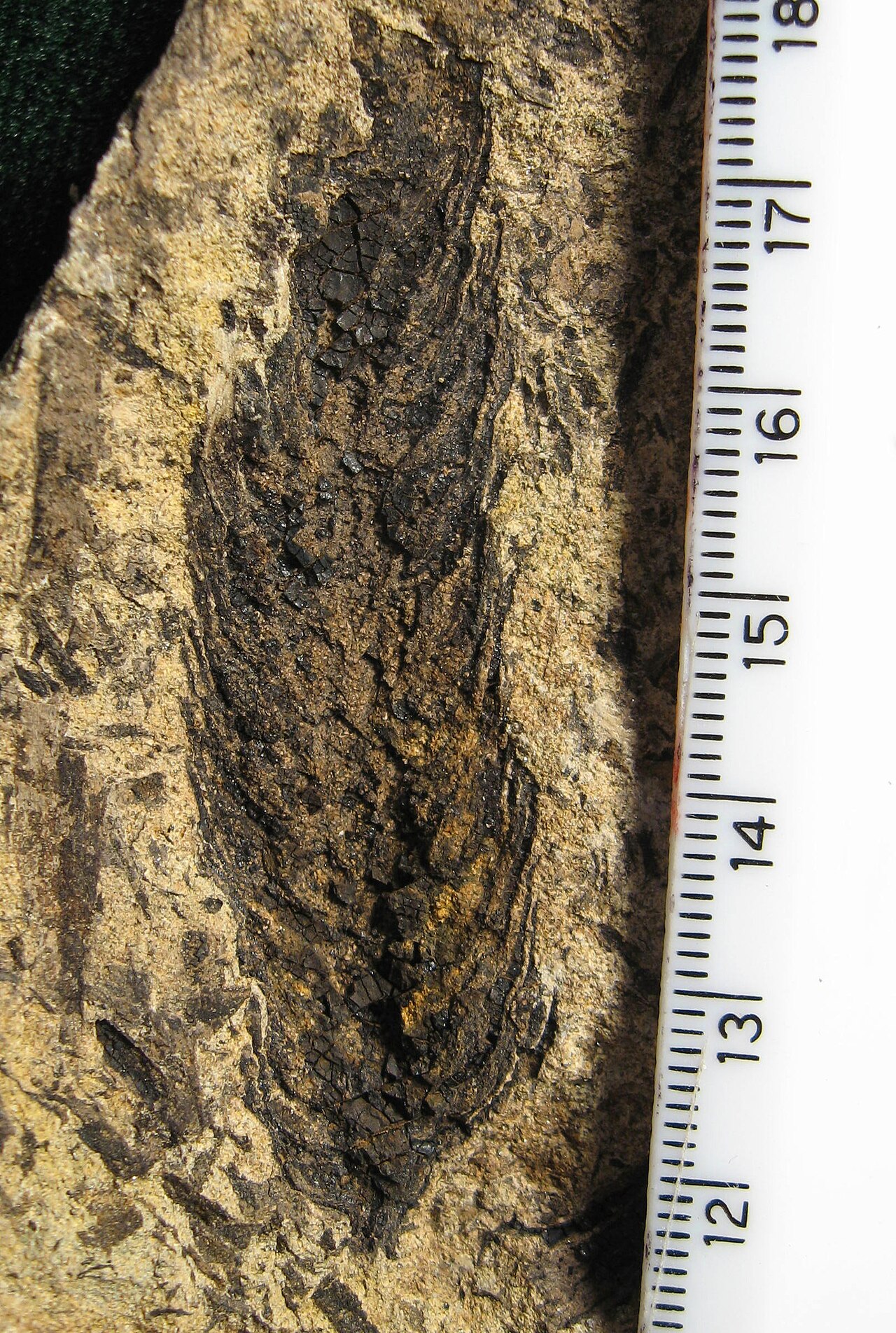
The fossil 'Eathiestrobus' is a stem-group pinaceous cone, not a crown-group member; the oldest definitive crown-group Pinaceae fossil is from the Early Cretaceous. Members of modern genera such as Pinus, Picea, and Cedrus first appear in the Early Cretaceous. The family rapidly radiated during the Early Cretaceous, and its distribution was historically limited to northern Laurasia.
Reader's Guide
Pinaceae are ecologically and economically significant as the dominant conifer family in boreal, coastal, and montane forests of the Northern Hemisphere. Their cones, with woody scales bearing typically two ovules, show variation in size and function shaped by selective pressure from seed dispersal mechanisms. The family's evolutionary history, including higher species turnover during the Cenozoic driven by glacial cycles, has shaped modern forest ecosystems. Pinaceae also exhibit complex mechanical and chemical defenses, particularly in their bark, against herbivores and pathogens.
Did You Know?
- One species, Pinus merkusii, grows just south of the equator in Southeast Asia.
- Boreal conifers have adaptations such as a conical shape to shed snow and waxy needle leaves to minimize water loss.
- The family includes both evergreen species and the deciduous genera Larix and Pseudolarix.
- The 'gnepine' hypothesis, which places Gnetales as sister to Pinaceae within conifers, is contested and not universally accepted.
Position Within the 2026 Conifer Record
The 2026 paleobotany list, which catalogs newly described fossil plant taxa and significant discoveries from that year, dedicates a distinct section to Pinaceae within its conifer taxonomy. This placement sits alongside Cheirolepidiaceae, Cupressaceae, Podocarpaceae, Taxaceae, and a catch-all category for other conifers, reflecting the family's recognized standing among the major conifer lineages tracked by paleobotanists. The broader conifer research reported for 2026 spans multiple families and geological periods, from Lower Jurassic morphological reconstructions in China to Oligocene wood taxonomic revisions in Romania. While the Pinaceae section in this particular list records no new fossil taxa for 2026, its inclusion in the taxonomic framework underscores the family's ongoing relevance to conifer paleobotany. The surrounding research context—spanning reproductive organ discoveries in Upper Triassic Argentina and cuticle structural revisions—illustrates the depth of conifer-focused inquiry that frames Pinaceae's position in the fossil record.
Climate-Driven Range Dynamics Among Conifers
Research reported in the 2026 paleobotanical record illuminates how climate shifts have shaped conifer distributions across deep time, providing essential context for understanding Pinaceae's biogeographic history. One notable study traces the Cenozoic fossil record of Metasequoia, demonstrating a southward shift in its range during the Neogene driven by global aridification, followed by further contraction during Pleistocene climate oscillations. In a parallel line of inquiry, evidence links the decline of Tsuga canadensis in North America to regional Holocene climate effects. These findings, though focused on other conifer families, establish the pattern of climate-mediated range compression that conifer paleobotanists apply across the group. The 2026 conifer research portfolio thus presents a consistent narrative: conifer lineages, including those within Pinaceae, have repeatedly responded to aridification and temperature shifts by retreating to more favorable refugia, a dynamic that continues to inform how researchers interpret the family's fossil distribution patterns.
Morphological Reconstructions and Wood Taxonomy
The 2026 conifer research stream includes several studies that advance our understanding of conifer morphology and wood anatomy, work that directly informs how Pinaceae specimens are interpreted within the broader conifer fossil record. A team reconstructing the general morphology of Pagiophyllum maculosum relied on the first fossil material reported from Lower Jurassic strata in China, demonstrating how new finds can reshape understanding of early conifer body plans. Separately, a taxonomic revision of coniferous woods from the Oligocene Petroșani Basin in Romania represents the kind of systematic re-examination that refines how wood anatomists assign fossil specimens to families. These efforts matter for Pinaceae because wood anatomy and reproductive morphology remain the primary tools for identifying conifer fossils to family level. The 2026 list also records bennettitopsid and gnetopsid reproductive organ discoveries from Upper Triassic Argentina and a cuticle structural revision for Pterophyllum crassinervum, all of which contribute to the comparative anatomical database against which Pinaceae fossils are evaluated.
Survival Through Mass Extinction Events
The 2026 paleobotanical record offers compelling evidence of how plant lineages navigated the Earth's great extinction events, a narrative in which conifer families like Pinaceae occupy a central role. Research on Permian–Triassic transitional lycophytes from southwest China reveals that crassulacean acid metabolism photosynthesis, similar to that seen in extant Isoetales, may have enabled survival through that catastrophic boundary. In the Triassic–Jurassic transition, palynological evidence from European strata indicates that fern-dominated savannas spread across continents following forest collapse, with continental-scale fires sweeping these new landscapes. Meanwhile, lycopsid studies document a short-lived proliferation of pleuromeian lineages in pioneer communities after Triassic forest ecosystem collapse. These recovery patterns—pioneer colonization, community reassembly, and physiological adaptation—establish the ecological templates against which conifer paleobotanists assess how Pinaceae and its relatives persisted, retreated, or expanded through each of these transformative intervals in Earth's history.
Gallery
Frequently Asked Questions
What role does Pinaceae play in its ecosystems?
It acts as the dominant tree component in boreal, coastal, and montane forests, effectively structuring entire landscapes throughout the Northern Hemisphere.
Where does Pinaceae occur geographically?
It holds the second-largest range among conifers, spanning most of the Northern Hemisphere from subarctic zones all the way down to tropical highland forests.
Why is Pinaceae considered so important?
Beyond its ecological dominance in northern forests, it supplies many of the world's most commercially vital timber and ornamental species, anchoring both forestry and horticulture.
More in Conifers & Allies 1-20
Spotted an error? Know more?
This is a living reference — every entry is fact-audited, and reader corrections feed straight into our audit queue. Suggest an edit · See this site's audit record