
Pinus lambertiana
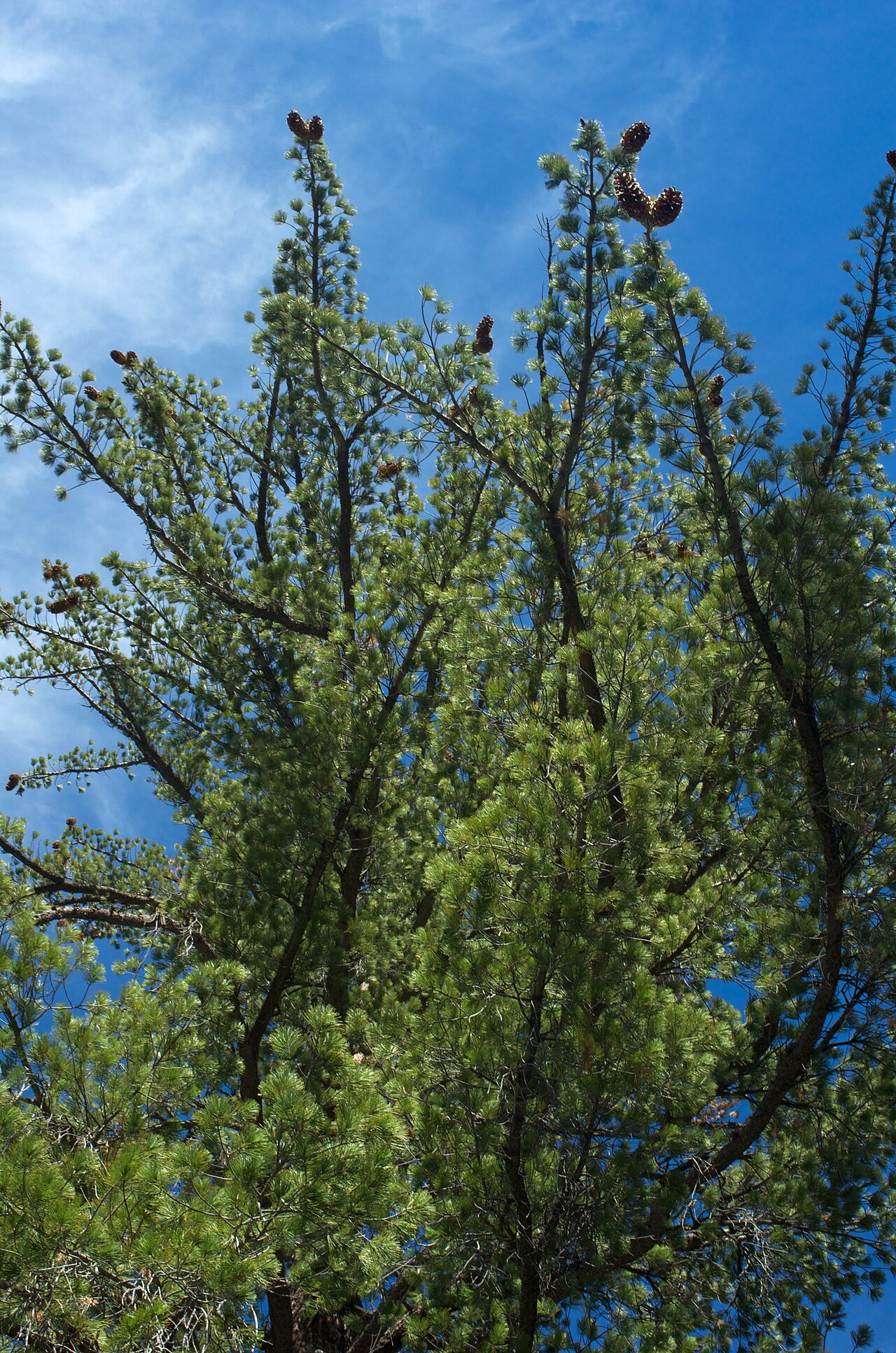
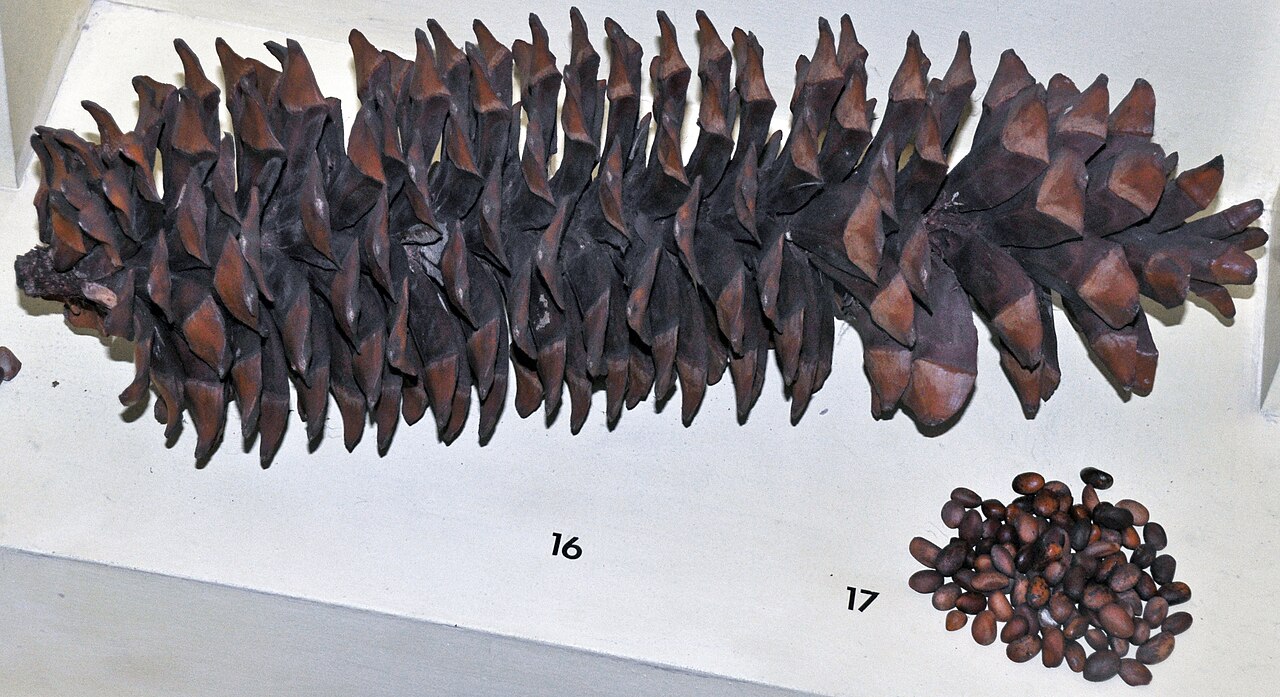
Tallest and largest pine, with among the longest cones.

David Prasad from Fresno, CA., United States · CC BY-SA 2.0
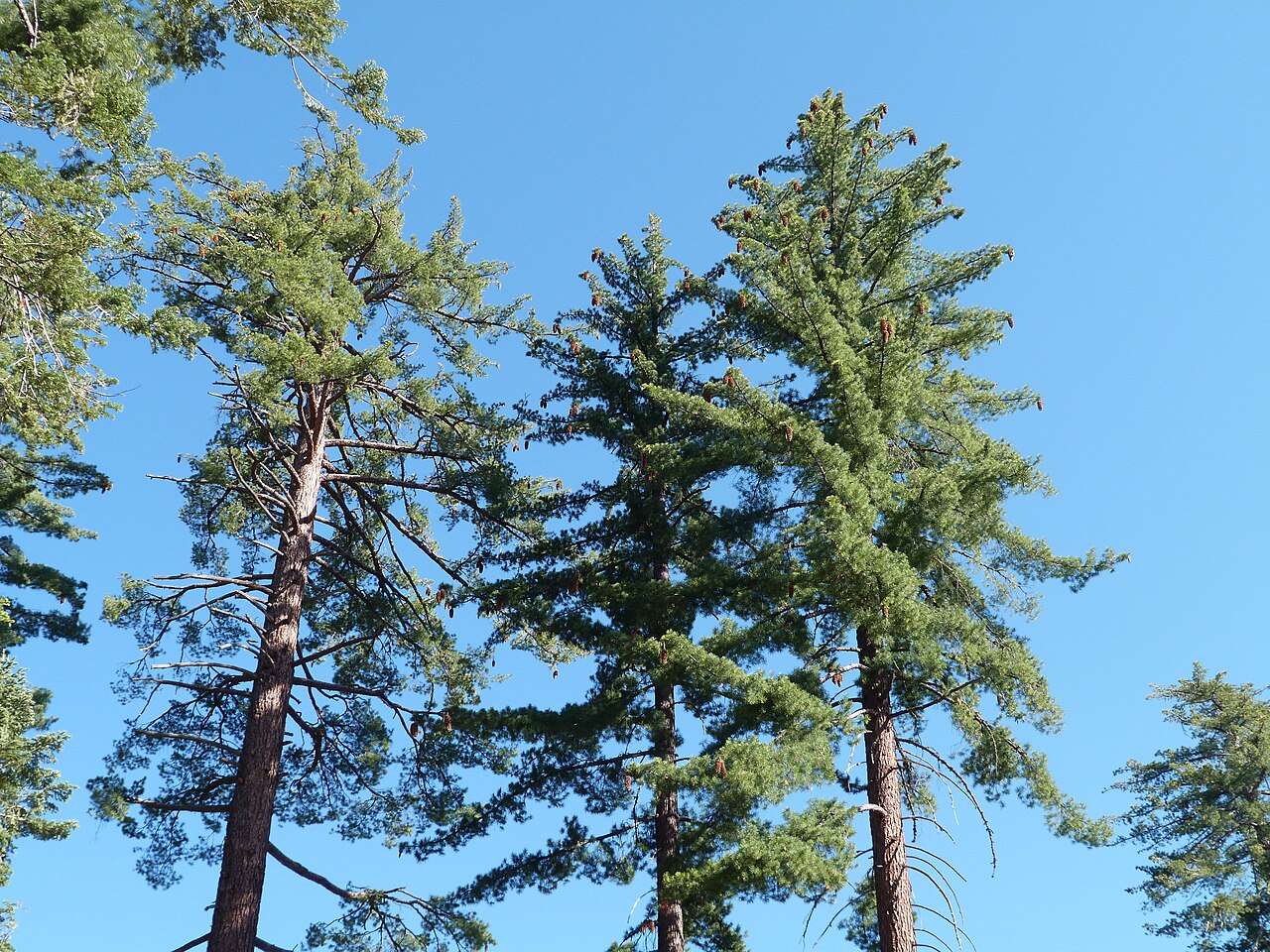
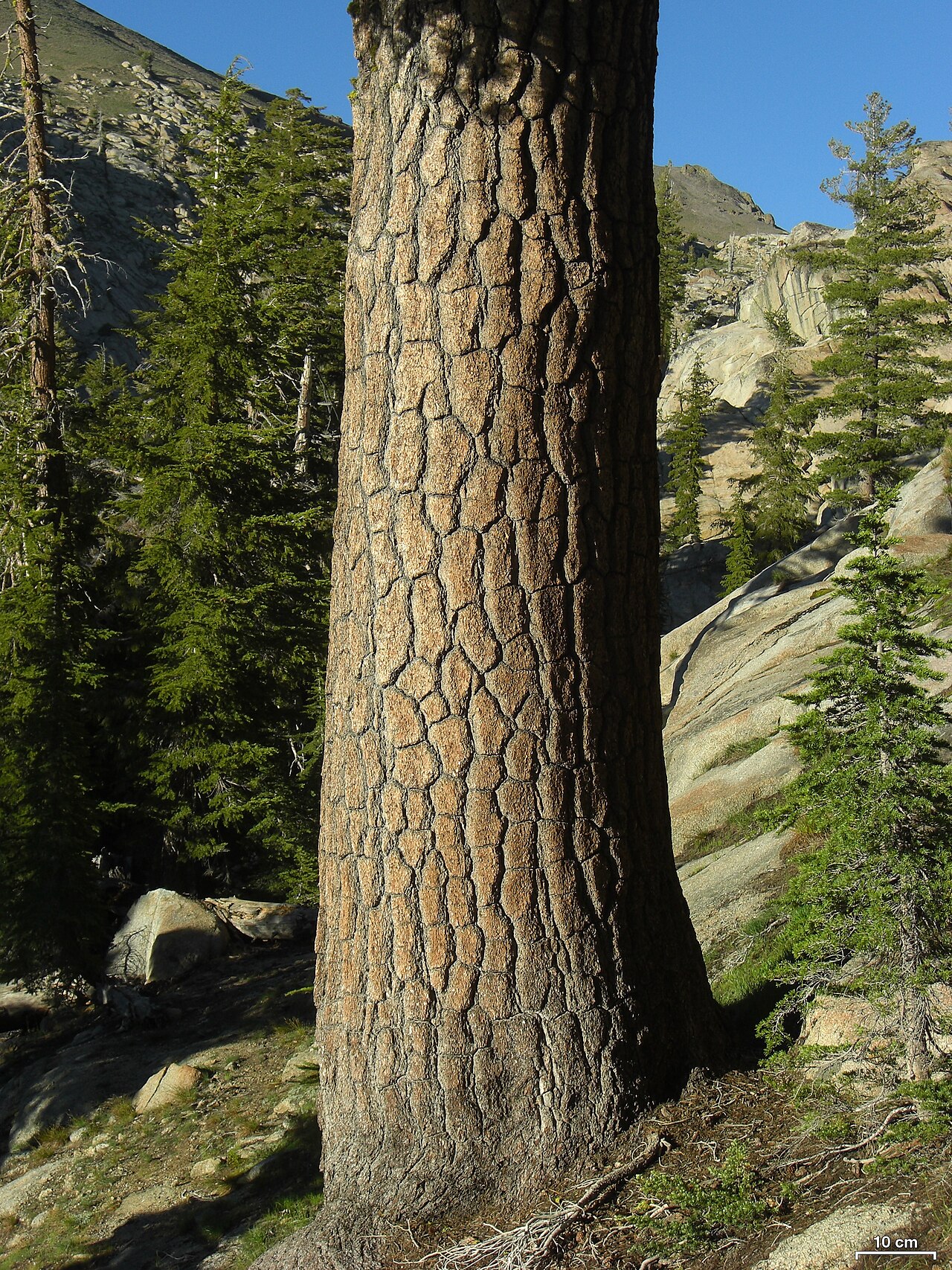
Pinus lambertiana, commonly known as the sugar pine, is a species of pine native to coastal and inland mountain areas along the Pacific coast of North America, from Oregon south to Baja California in Mexico. It is the tallest and most massive pine tree and has among the longest cones of any conifer.
- common_name
- Sugar pine
- scientific_name
- Pinus lambertiana
- max_trunk_diameter
- 3.5 m (11 ft 6 in)
- cone_length
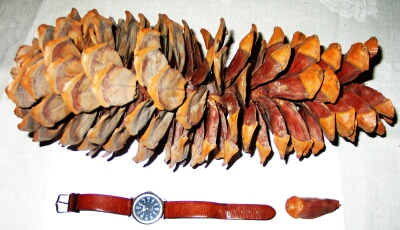
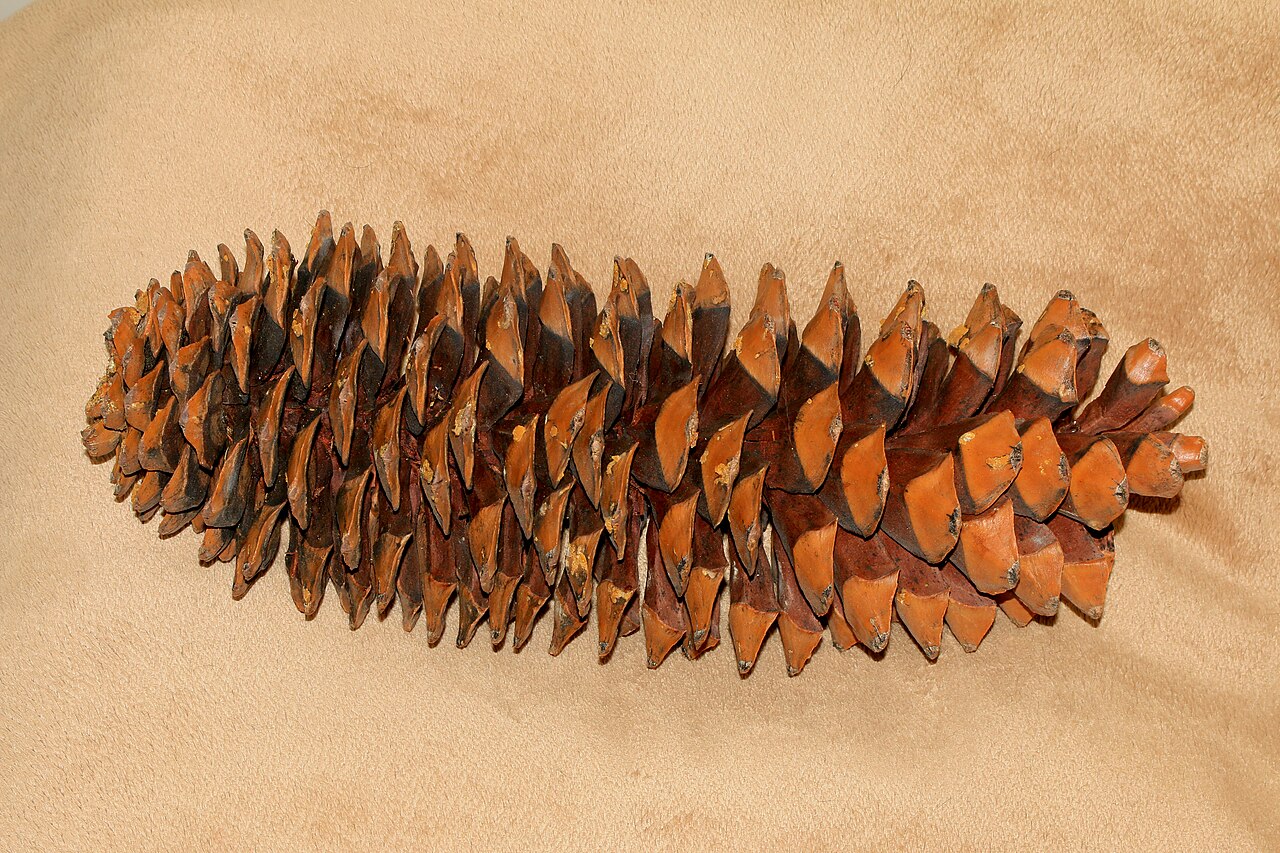
- 10–50 cm (4–20 in), occasionally up to 56 cm (22 in)
- native_range
- Oregon, California, Baja California
- notable_for
- Tallest and largest pine species; among longest conifer cones
Lore & Background
The sugar pine is the tallest and largest species of pine, commonly growing 40–60 meters tall, with exceptional specimens reaching over 82 meters. The species has among the longest cones of any conifer, typically 10–50 cm long, though they can reach 56 cm. Its bark is brown to purple and 5–10 cm thick. The needles grow in bundles of five and are 5–11 cm long. The seeds are 1–2 cm long with a 2–3 cm wing for wind dispersal. While often found in mixed forests, sugar pine can form nearly pure stands in some locations, and its shade tolerance is moderate, not strongly shade tolerant.
Reader's Guide
Pinus lambertiana holds significance as the tallest and most massive pine species, with a genome among the largest sequenced in plants—31 gigabases, expanded by transposable elements. Its common name derives from the sweet resin used by Native Americans as a sweetener, which John Muir considered superior to maple sugar. Mountain pine beetles and climate change further weaken trees, reducing resin defenses and increasing pest survival. Conservation efforts include the U.S. The species is also ecologically important: its large, nutritious seeds are gathered by yellow pine chipmunks, Steller's jays, and black bears. Despite its thick bark providing fire resistance, drier conditions and higher temperatures linked to climate change increase mortality and fire risk.
Did You Know?
- The sugar pine's genome is 31 gigabases, one of the largest sequenced and assembled genomes in plants.
- The common name comes from the sweet resin, which Native Americans used as a sweetener.
Gallery
Frequently Asked Questions
What is Pinus lambertiana?
Pinus lambertiana is a species of pine tree more commonly called the sugar pine. It is native to the Pacific coast region of North America, stretching from Oregon down through California and into Baja California, Mexico.
What's special about Pinus lambertiana's cones?
Sugar pine produces some of the longest cones of any conifer, typically ranging from 10 to 50 centimeters (4 to 20 inches) in length. On rare occasions, a single cone can stretch as far as 56 centimeters (22 inches).
Where does Pinus lambertiana naturally occur?
Its native range covers both coastal and inland mountain zones along the Pacific coast, from Oregon southward through California and into Baja California in Mexico.
Why is Pinus lambertiana considered significant among conifers?
It stands out as the tallest and largest pine species on the planet while also bearing some of the longest cones found in the entire conifer family. These two traits together make it a standout member of the genus Pinus.
More in Conifers & Allies 1-20
Spotted an error? Know more?
This is a living reference — every entry is fact-audited, and reader corrections feed straight into our audit queue. Suggest an edit · See this site's audit record